

Two days after the Oregon attack, the Associated Press opened a story with a familiar claim: “Few mass shootings in the U.S. end like the deadly attack on an Oregon elementary school: with an armed civilian opening fire on the gunman.” NPR noted: “how rarely an armed civilian ends an attack like this.” The following day, the first sentence in the Los Angeles Times article declared: “Few mass shootings in the United States end like the deadly attack on an Oregon elementary school: with an armed civilian opening fire on the gunman rare.”
The PBS Newshour had on an “expert,” James Densley, co-founder of the Violence Prevention Project. who claimed: “And this is the first time a civilian shot and stopped the attacker.”
But just since the beginning of 2025, there have been sixteen such defensive gun uses where police have made similar statements about armed civilians acting to save many lives. By contrast, there were five mass public shootings in the US and Puerto Rico over that same period (see list below). With regard to the FBI’s broader definition of active shootings, over the twelve years from 2014 to 2025, 36.6% of the active shooting attacks were stopped by legally armed civilians and excluding gun-free zones it average over 52.9%. (The definition of Mass Public Shootings is provided here.)
KUOW, Seattle interviewed Eric Madfis, a criminal justice professor at the University of Washington Tacoma, in discussing the armed bystander’s intervention: “That’s pretty rare. We think of the idea of a good guy with a gun coming in and stopping things. That’s a rhetorical thing people say, but that actually doesn’t happen very often, so that’s quite interesting.”
In the past, there have been similar headlines that illustrate this framing: “Rare in US for an active shooter to be stopped by bystander” (Associated Press); “Rampage in Indiana a rare instance of armed civilian ending mass shooting” (Washington Post); and “After Indiana mall shooting, one hero but no lasting solution to gun violence” (New York Times). See also “An armed civilian stopping a gunman is very uncommon” (CBS News), “An armed bystander returned fire and ended the mass shooting. Analysis of active shooter incidents shows that this rarely happens” (Politifact), “it’s incredibly rare for a bystander with a gun to stop an active shooter” (CNN), “cases of an armed bystander attacking an active shooter are rare” (CNN), “It is rare for a bystander to stop an ‘active shooter’ attack in the United States” (Reuters), “‘Good Guys With Guns’ Can Rarely Stop Mass Shootings, and Texas and Ohio Show Why” (Time), “Though he was ‘grateful’ for Salinas’ actions, what occurred was ‘rare,’ Keith explained” Deseret News, and “It’s not very often that somebody with a gun who’s a private citizen plays a useful role in ending these mass shooting events” (ABC News). Not too surprisingly, a media outlet such as Michael Bloomberg funded The Trace claims “armed civilians almost never prevent or stop rampage attacks — no matter where they occur.”
The pattern is extremely consistent: after a high-profile case in which an armed civilian intervenes and gets news coverage, the following coverage frequently pairs praise for the individual with data-driven framing that such outcomes are rare.
The media won’t cover them, but there are lots of mass public shootings stopped by legally armed citizens. Lots of active shootings stopped.
Other examples of news media coverage after the 2026 Oregon elementary school case.
| Outlet | Date | Relevant wording or treatment |
|---|---|---|
| NBC Bay Area | October 17 | The summary beneath its headline says: “President Donald Trump and others praised Giamanco, but such interventions remain rare.” (nbcbayarea.com) |
| The Boston Globe | October 17 | Reproduced AP’s opening and its subsequent assertion that comparable interventions remain rare. (The Boston Globe) |
| Winnipeg Free Press | October 17 | Published the report under Jim Vertuno’s AP byline, including the same rarity claim. (Winnipeg Free Press) |
| WCCO Radio / Audacy | October 17 | Published the AP report with the same opening, rarity assertion, and ALERRT figures. (audacy.com) |
Other international coverage is similar.
BBC (July 2022, on the Greenwood, Indiana mall shooting stopped by Elisjsha Dicken): Praised the armed bystander as a “hero” per police, then added: “But such outcomes are unusual. Only four out of 61 such attacks last year ended when armed bystanders engaged the active shooter, according to an FBI report in May.”
The Guardian (May 2023, on an FBI active-shooter survival video): “It’s exceedingly rare for civilians to stop mass shootings… Actually stopping a mass shooter as a civilian is exceptionally rare, according to Texas State University’s Advanced Law Enforcement Rapid Response Training Center. Less than 3% of more than 430 active attacks in the US ended with a civilian firing back from 2000 to 2021.”
ITV News (UK, October 2026, on the Oregon elementary school shooting): Reproduced the Associated Press framing almost verbatim (“Few mass shootings in the U.S. end like the deadly attack on an Oregon elementary school: with an armed civilian opening fire on the gunman”) and stated that “Cases like the Oregon intervention remain rare,” citing ALERRT data (29 of 634 active attacks ended by an armed civilian shooting the attacker).
BBC (September 2014, reporting an FBI study of 160 active-shooter incidents 2000–2013): Noted that only one incident ended when an armed citizen who was not a security guard responded with gunfire; overall, five incidents ended when armed individuals (mostly security) exchanged gunfire with the shooter.
ABC Radio National, Australia noted: “Armed citizens intervening in shooting rampages in public are very rare.”
2025 (4 incidents, per CPRC data through the full year)
There were four mass public shootings 2025.
January 27, Puerto Nuevo, Puerto Rico: Workplace shooting at a plumbing business in which an accountant killed four coworkers after a discussion, then died by suicide.
July 28, New York City (Park Avenue office building): Four killed (including an off-duty police officer working security).
July 29, Tiptonville, Tennessee: Four people (family members) killed in a rural area.
August 1, Anaconda, Montana: Four killed at a bar (The Owl Bar).
2026 Under the criteria of public shootings in which 4 or more people were murdered (excluding the shooter) and that were not connected to other crimes such as robbery or gang/drug activity, the only incident in 2026 so far is:
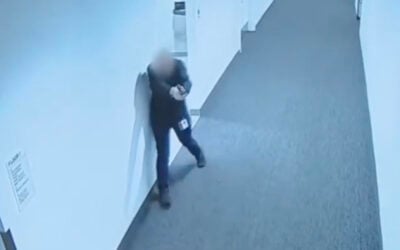
October 15, 2026, Bend, Oregon (Silver Rail Elementary School): A 16-year-old former student entered the school and killed three children (ages 5, 8, and 11) and one teacher before being shot and killed by an armed bystander who pursued him inside. Two others (a child and a teacher) were critically injured.Reuters (https://www.reuters.com/world/shooter-is-killed-oregon-elementary-school-least-two-taken-away-ambulance-2026-10-15/)
Other 2026 cases with multiple deaths do not meet the threshold. Examples include the Twin Falls, Idaho In-N-Out shooting (3 killed), a San Diego mosque shooting (3 killed), an Austin bar shooting (3 killed), and domestic/family killings in homes (such as in Erie, Pennsylvania, and Douglas, Georgia), which are excluded as non-public or involving private/family circumstances. One example where four were killed at a rural home in Edinburg, Texas on March 1, 2026 after a road rage incident. An October 11, 2025, shooting in Leland, Mississippi, appears to meet the criteria regarding the number of victims killed and the public location, but with a total of nine people arrested and charged with charges from attempted murder to capital murder, it appears to have involved rival gangs.



0 Comments