
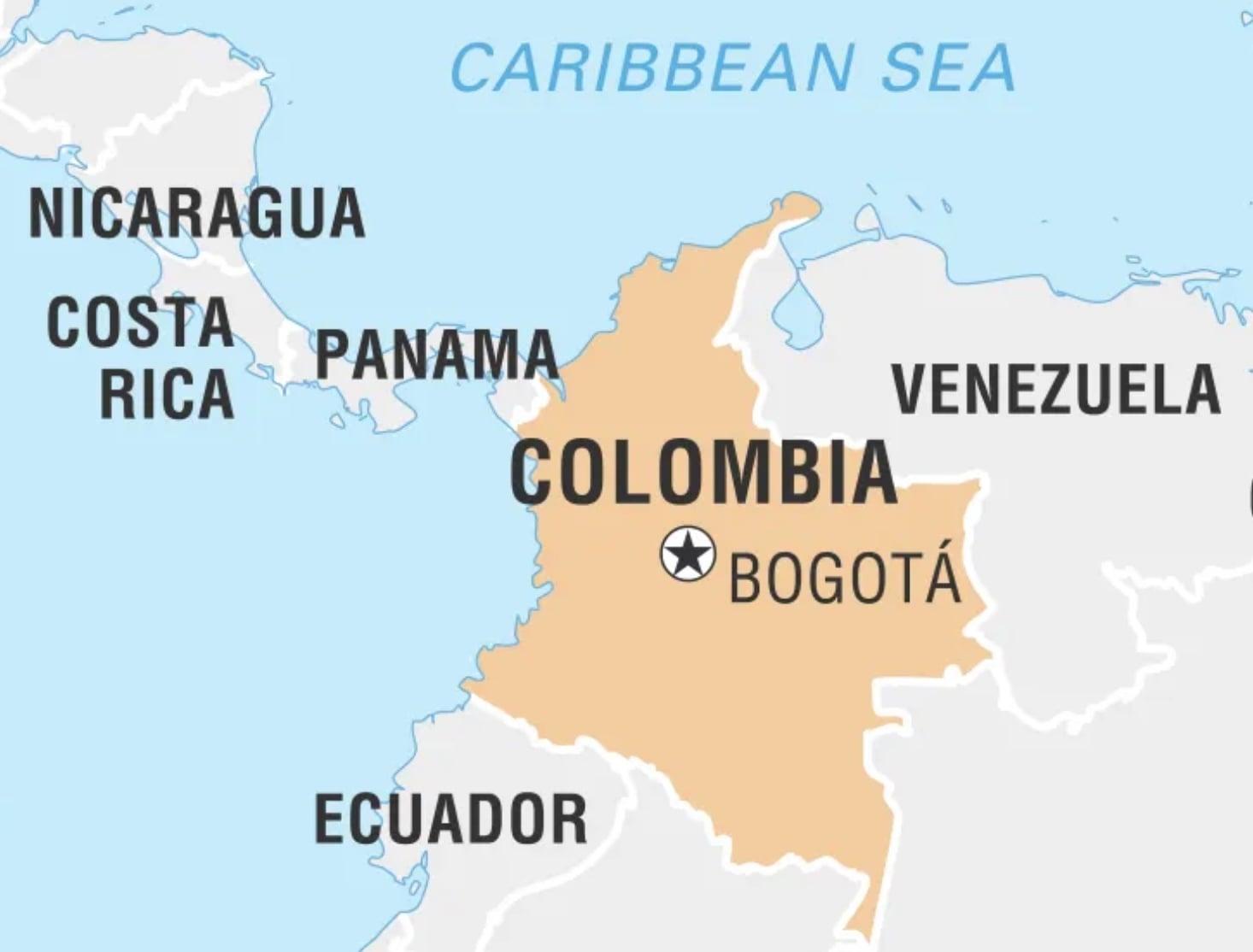
On September 8, 2026, President Abelardo De la Espriella signed Decree 1368, lifting Colombia’s nationwide suspension of permits to carry firearms. The decree ends the general prohibition on firearm-carry permits that Colombia had maintained since 2014.
This follows after Bolsonaro increased the rate that people could carry handguns for protection in Brazil. Bolsonaro’s May 2019 Decree 9,785 attempted to define numerous occupations as inherently risky for purposes of satisfying the 2003 Disarmament Statute’s “effective necessity” requirement. The categories included, among others, lawyers, truck drivers, elected officials, journalists covering police matters, rural residents, shooting instructors, and certain public employees. This would have greatly reduced the Federal Police’s discretion for those groups. There was a dramatic reduction in murder rates in Brazil.
An English translation of the decree is available here.
Colombia Decree 1368 – Lifting of Restrictions on the Carrying of Firearms
Summary of Decree 1368 of 2026 (De la Espriella Government – Colombia)
1. Main Purpose President Abelardo De la Espriella signed Decree 1368 of September 8, 2026, which lifts the general suspension of permits to carry firearms throughout the national territory. This measure dismantles the general prohibition scheme that had been in force in Colombia since 2014.
2. Immediate Effects for Citizens
- Reactivation of valid permits: The effectiveness of individual carry permits that are currently valid is automatically restored.
- Elimination of the “Special Permit”: Holders of a valid carry permit (salvoconducto de porte) no longer need to process additional special authorizations before military authorities or brigades.
3. What Does NOT Change (Limits and Regulatory Framework)
- This is not free carry or free sale: The regulation does not establish a model of indiscriminate weapons acquisition in the U.S. style; the state monopoly on firearms is maintained (Article 223 of the Constitution).
- Exclusive purchase channel: Legal acquisition of firearms continues to take place solely through the Military Industry (Indumil), subject to prior approval by the Department of Control of Trade in Arms, Ammunition and Explosives (DCCAE).
- Strict filters and suitability requirements: To obtain a permit for the first time or to renew it, citizens must demonstrate physical, psychological, and emotional suitability, have no criminal record, and pass rigorous evaluations.
4. Exceptions and Excluded Cases (Art. 6)The lifting of the suspension does not authorize carrying in the following cases:
- Permits that are expired, individually suspended, canceled, or revoked.
- Firearms covered under a possession permit (which may only remain in the authorized premises).
- Firearms subject to judicial or administrative measures or current seizures.
5. Executive Justification
The government based the decision on the fact that more than 99.9% of crimes involving firearms are committed with illegal weapons and that the general prohibition disarmed law-abiding citizens, leaving the monopoly of violent force in the hands of organized crime.
In Colombia, under the framework of Decree-Law 2535 and the guidelines of the Department of Control of Trade in Arms, Ammunition and Explosives (DCCAE), the strict suitability filters that a citizen must pass to obtain or renew a carry permit include:
1. Psychophysical Fitness Certification
- Psychological and psychiatric evaluation: Tests measuring impulse control, stress management, personality traits, and screening for pathologies or behavioral disorders.
- General medical examination: Assessment of visual acuity, hearing, and motor coordination.
- Toxicological examination: Screening for use of narcotic or psychotropic substances or alcohol dependence.
2. Background Check and Security Profile
- Judicial records certificate: Absence of convictions, final sentences, or criminal proceedings for intentional crimes.
- Social conduct history: Absence of records for domestic violence, gender-based violence, or investigations for disruption of public order.
- Database cross-check: Direct verification in the systems of the National Police and the Military Forces.
3. Training and Technical Proficiency
- Safe handling course: Approved theoretical-practical evaluation covering safety rules, assembly/disassembly, and a live-fire test at a shooting range with authorized instructors.
4. Legal Purchase and Centralized Traceability
- Exclusive state channel: The firearm must be acquired solely through the Military Industry (Indumil), with prior DCCAE approval and biometric/ballistic registration of both the user and the weapon.
5. Minimum Age and Administrative Requirements
- Compliance with the legally required age (25 years).


0 Comments