
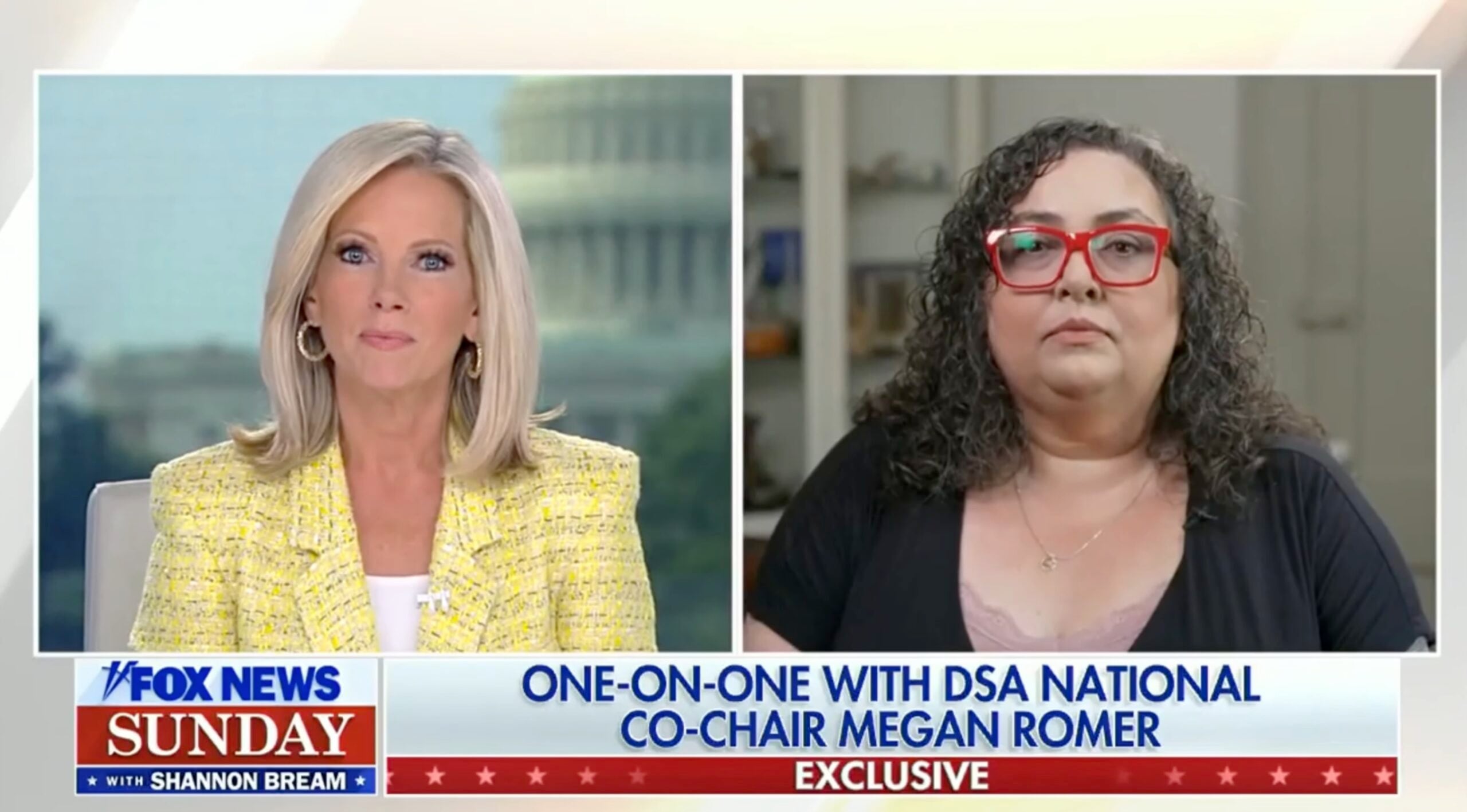
This interview on Fox News Sunday with the co-chair of the Democratic Socialist of America has the claim that most people in prison there for crimes motivated by poverty.
Here are some facts:
Roughly 58.2% of state prisoners (2019 data) had a most serious offense that was violent: murder/nonnegligent manslaughter ~13.3%, negligent manslaughter 1.6%, rape/sexual assault ~13.7%, robbery ~12.4%, aggravated/simple assault ~13.6%, other violent ~3.6%, property offenses ~15.3%, drug offenses ~14% (3.8% possession, 10.2% of other), public-order ~12% (weapons, 4.0%, DUI/DWI 1.7%, Other 6.2%). Federal prisons are different (heavier on drugs ~47% and public-order/weapons/immigration), but they are a minority of the total prison population. Overall, violent offenses dominate state systems.
Robbery and property crimes have a clearer economic component (a total of 29% of prisoners), but that is not the same thing as saying that those crimes are driven by poverty. However, large shares of the violent category (homicide, sexual assault, assault) are typically driven by interpersonal conflict, impulse, intoxication, status/gang dynamics, or other non-economic motives rather than material need. Even for property and drug offenses, inmate backgrounds show high rates of prior offending, addiction, low education, and disrupted families; pure “survival poverty” is not the demonstrated primary driver for most.
Peer-reviewed panel (longitudinal cross-section) studies of crime rates routinely include poverty (or related measures such as unemployment, income, or inequality) as a control. These typically use county- or state-level data over time with fixed effects. Key patterns:
- Poverty is usually positively associated with (especially property) crime rates; the relationship is often statistically significant.
- The magnitude and share of explained variation are modest once unit fixed effects, time effects, demographics (age structure is especially powerful), deterrence measures (arrest/conviction rates), and other controls are included. Fixed-effects designs identify from within-unit changes over time. Poverty rates move slowly relative to crime rates, so their contribution to explaining year-to-year or decade-to-decade variation is limited.
- Simple cross-sectional or bivariate associations produce higher R² (sometimes in the 0.15–0.40 range in illustrative regressions), but these are inflated by omitted variables that correlate with both poverty and crime (family structure, cognitive ability distributions, social norms, lead exposure histories, policing intensity, etc.). Panel designs shrink the apparent role of poverty.
- John Lott’s “More Guns, Less Crime” (county-level, city, and state level panels spanning many years) includes poverty rate, welfare payments, unemployment, income, and related socioeconomic variables among the controls. The socioeconomic factors as relevant but not dominant relative to deterrence, demographics, and the policy variables of interest. Poverty only explains a few percent of the variation in crime rates.
Transcript of video.
Host (Shannon Bream):
Is there anybody that should be incarcerated? I mean, rapists, child predators, murderers.
DSA Co-chair (Megan Romer): Yeah. So, the long-term plan, when we think about most people who are in prison, they are mostly in prison for crimes of poverty. Um, so when we—
Host: But that’s not who I’m talking about. I’m talking about the really [bad] rapist of the world.
Romer: When we— Yeah. So when we get rid of this need for crimes of poverty to exist, when we get rid of that destabilizing force that that creates so many people who are living in desperate situations and doing desperate things, that brings those numbers down to very small numbers and then we can collectively decide what we do with those people. I suspect it won’t look like the prison system as we know it today.
Host: Okay. But you do think some people need to be locked away from society.
Romer: Some people are not able to be functional members of society. That’s true. But what does that look like to keep the rest of us safe? You know, it’s— we’re talking about safety. We’re not talking about um punishment. We’re talking about making sure that we’re safe, everybody’s safe, everybody maintains their dignity,




0 Comments