
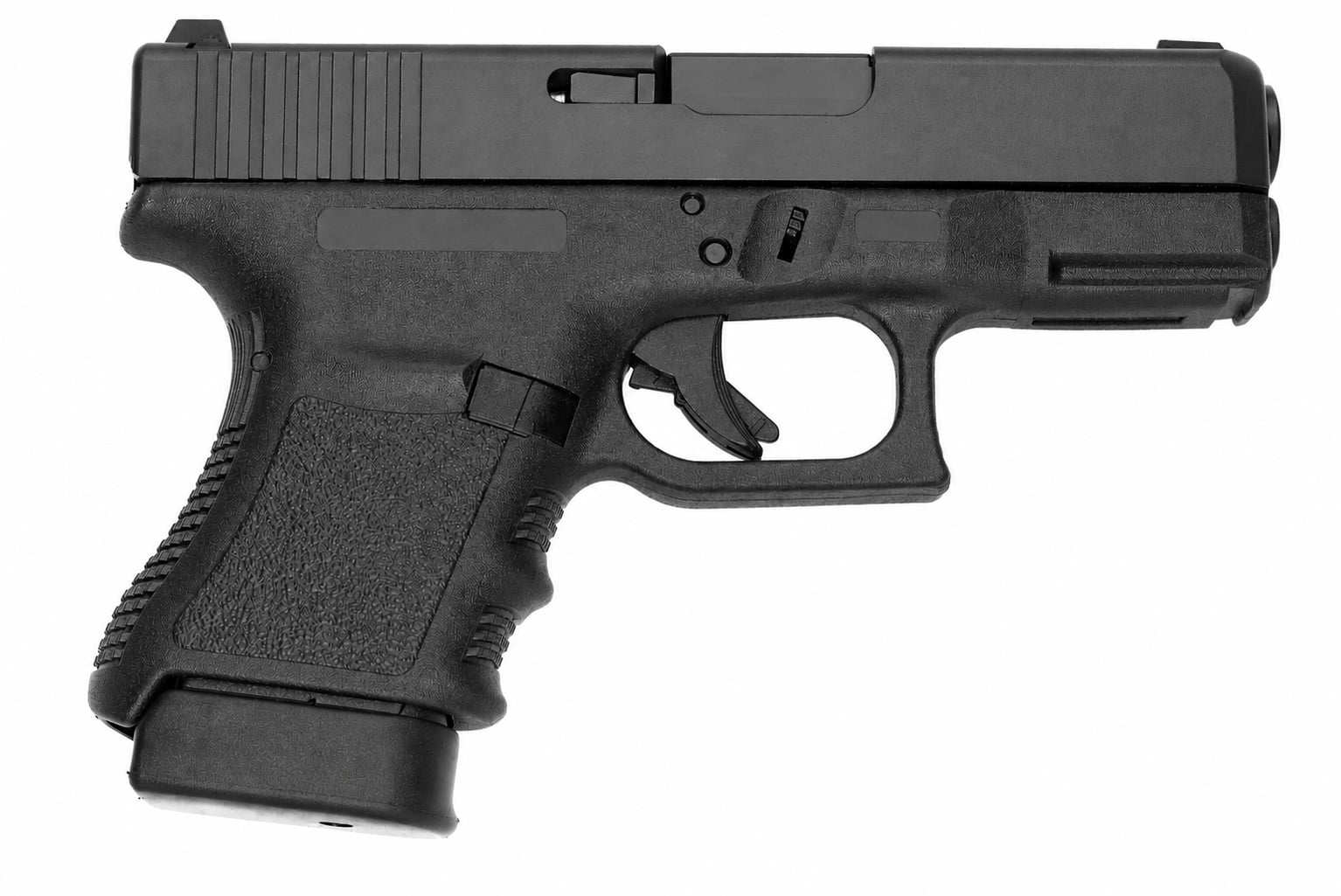
For those concerned that background checks will eventually be used to create gun registries that can later facilitate confiscation, they need only look at what is happening now in New Jersey. New Jersey’s Attorney General relies on questionable claims to justify targeting Glocks as firearms that can supposedly be easily converted into true fully automatic machine guns.
New Jersey Attorney General Jennifer Davenport’s office is subpoenaing FFLs across the state for records involving Glock pistol sales to New Jersey residents. The subpoenas, reportedly dated around May 11, 2026, began reaching dealers on May 14 and impose a response deadline of June 15, 2026. A Superior Court judge hearing the case has refused to dismiss the lawsuit and is allowing discovery to go forward.
The subpoenas demand records covering every lawful sale or transfer of Glock handguns dating back to January 2016 — roughly the past decade. They reportedly target all New Jersey FFLs and require dealers to turn over extensive customer and sales information.
The demands include buyer names and addresses, dates of sale, firearm details such as make, model, serial number, and caliber, and whether the firearms were sold to civilians or law enforcement. The subpoenas also seek information on how dealers obtained Glock inventory, contracts or agreements with Glock, communications with Glock concerning sales, marketing, “switches,” or automatic-fire capability, and records related to advertising and marketing directed at New Jersey customers.
Those who support gun ownership are concerned that compiling these buyer lists in litigation could expose personally identifiable information and serve as a step toward broader tracking or future confiscation efforts.
“What’s funny is these folks want all the gun records, but they don’t want to give the federal government voting records,” Assistant Attorney General for Civil Rights, Harmeet Dhillon notes irony.
Democrats are now using a background-check system that wrongly denies well over 99% of blocked gun purchases to help build a gun registry to facilitate confiscation. Those errors overwhelmingly burden law-abiding black and Hispanic men, who are disproportionately caught in mistaken denials despite having committed no disqualifying offense.
New Jersey argues that Glock knowingly designed and marketed pistols that criminals can convert into illegal machine guns with so-called “Glock switches” or auto sears. According to the state, Glock has known about this problem for years, received repeated warnings from law enforcement, and still refused to redesign its pistols to make those conversions more difficult.
Glock rejects the claim that its pistols are uniquely or unusually easy to convert. Glock’s semiautomatic operating system is not fundamentally different from many other modern semiautomatic pistols. Glock pistols use a fairly conventional short-recoil, locked-breech design that is common across much of the handgun industry. In addition, the company argues that criminals—not Glock—bear responsibility for illegally modifying firearms with already-prohibited conversion devices.
Moreover, the mechanism created by a Glock switch differs fundamentally from the way a true fully automatic machine gun operates. A military-style machine gun uses an integrated fire-control system specifically engineered for automatic fire. By contrast, a Glock switch interferes with the pistol’s existing trigger-bar and reset mechanism. The device wedges the trigger bar out of engagement and forces the pistol’s short-recoil action to continue cycling uncontrollably as long as the trigger remains depressed.
That crude method creates serious reliability and safety problems. Because the switch bypasses normal timing and reset functions, the pistol can fire before the slide and chamber are fully closed and locked. That creates a real risk of catastrophic malfunction, including damage to the firearm and potentially serious injury to the shooter.
Common damage includes a destroyed or blown-open magazine, cracked or split receiver/upper, damaged or missing bolt, firing pin, extractor, ejector, operating springs, and stock.
Flying brass shards or case fragments can slice skin (hands, arms, face, cheek) or embed in tissue. Real incidents include a shooter’s thumb being sliced open “like a box cutter” with powder burns, or brass embedding in a shoulder causing bleeding. Fragments can strike the face or eyes.
But others besides the shooter can also be harmed. “The problem about that is when you pull the trigger you can’t stop it, the gun, the bullets are going to go and what we’re seeing is young people and adults can’t control their gun. . . ” warned Richland County, South Carolina Sheriff Leon Lott. “You may hit a lot of innocent people and you may even hit people that’s on your team because you can’t control that gun.”
New Jersey’s lawsuit against Glock goes far beyond targeting criminals who illegally modify firearms. By demanding detailed records on lawful gun buyers while advancing questionable claims about how these conversions actually work, the state is moving toward the type of firearm registry that gun owners have long feared.



0 Comments